Construction Site Toilet Hire West Midlands
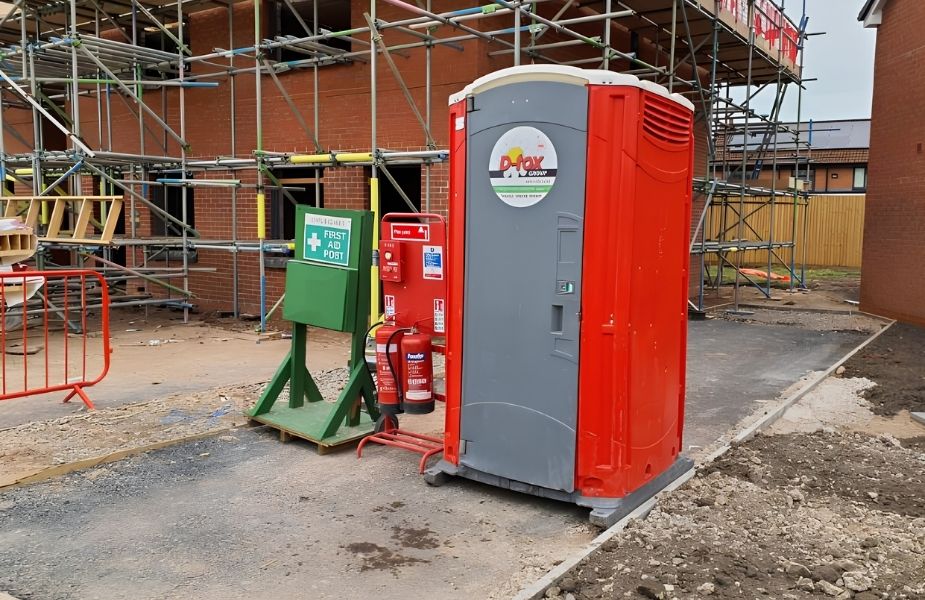
Expert guidance on portable toilets,welfare facilities, servicing and site planning for construction projects
If you’re responsible for a constructionsite, providing suitable welfare facilities is something you should befactoring into your project early on.You will need to consider:
- How many people will be on site.
- Where they will be working.
- How accessible the facilities are.
- How often they need servicing.
- How your site layout will change as construction progresses.
For more than 30 years, D-Tox has providedconstruction site toilet hire and effluent waste management across the WestMidlands. We work with construction companies, contractors and site managers onprojects ranging from small building works through to large developments.
We can guide you through what you need toconsider when planning construction-site toilet provision, including HSE andCDM requirements, toilet numbers, positioning, servicing, costs and practicallessons we’ve learned from years of working on construction sites.


Construction sIite toilet requirements : Q&A
How many toilets do I need?
See our full guide below on calculating theright number for your site.
Are toilets required by law?
Construction sites must provide suitableand sufficient sanitary conveniences as part of their welfare provision.
Do I need handwashing facilities too?
Yes. Suitable handwashing facilities mustbe provided in the immediate vicinity of your toilets. By suitable, this meanshot (warm) and cold running water with soap and drying facilities) such aspaper towels or a hand dryer).
How often should toilets be serviced?
It depends on usage. Weekly servicing is aminimum expectation, but busy sites may need more frequent servicing, and thesecan be added onto your hire if needed.
Where should toilets be positioned?
Somewhere readily accessible to workers, onsuitable ground, where it is not soft or uneven, and where servicing vehicles can safely reach them.
Canportable toilets be used on construction sites?
Yes, where appropriate. HSE guidance saysportable chemical toilets are acceptable where other adequate provision is notreasonably practicable.
PLEASE NOTE: Toilet numbers, servicing and positioning should be planned around the actual construction site rather thantreated as a one-size-fits-all calculation.
Constructionsite welfare requirements
Construction projects in Great Britain are subject to the Construction (Design and Management) Regulations 2015 (CDM). The practical guide of how to fulfill these legal obligations are covered in HSEguidance, in other words, if you’re meeting the guidance recommendations, you are meeting the legal responsibilities.
The HSE states that welfare provision, including its location and regular maintenance, should be considered during the planning and preparation stages ofa project, before construction work begins.
Who is responsible for construction-sitewelfare?
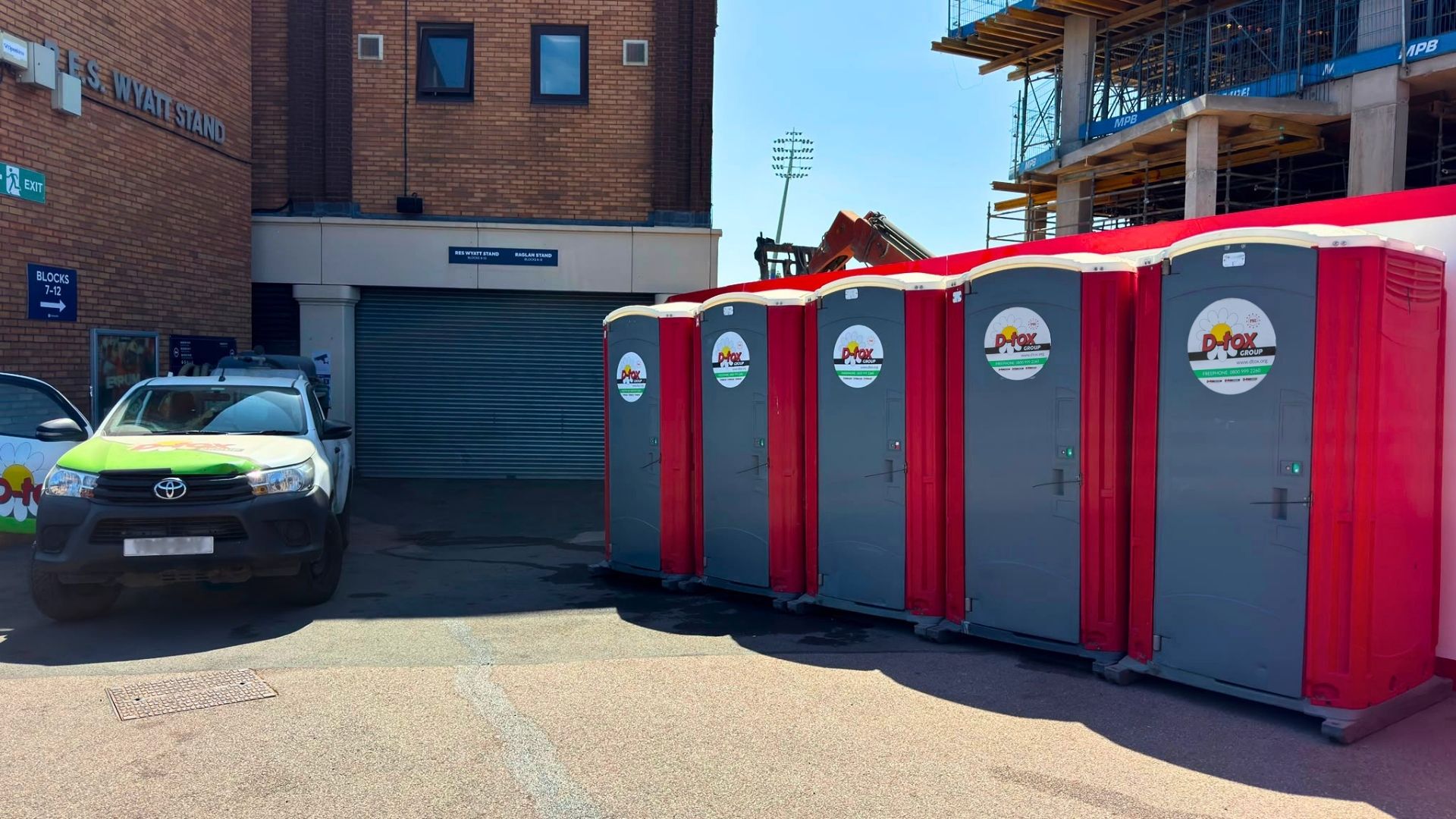
The principal contractor has a key responsibility for ensuring suitable welfare facilities are provided throughoutthe construction phase. Contractors, including self-employed workers, also have responsibilities to ensure adequate welfare facilities are available for workers under their control.
Welfare therefore needs to form part of theconstruction planning process rather than being treated as an afterthought.The HSE’s guidance specifically recommends considering:
- The number of people who will use the facilities
- How far workers have to travel (to facilities)
- The duration of the work
- Whether workers will be working in different locations
- Cleaning and maintenance
- Whether facilities will need to be relocated as the project develops
How Many Toilets Does a Construction Site Need?
Choosing Portable Toilets for Your Site
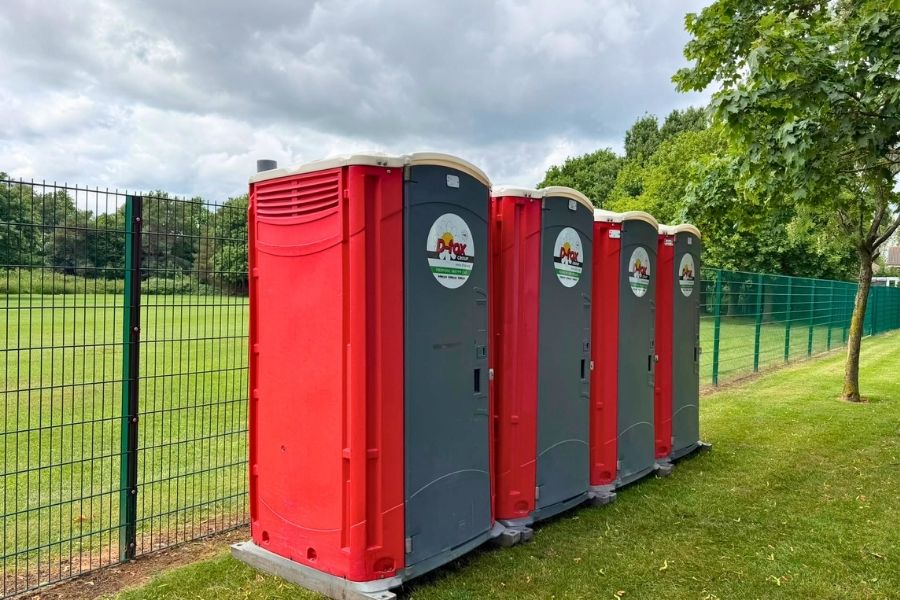
Standard portable toilets
Suitable for most construction projects including new builds, housing developments, groundworks and civil engineering.
Units are self-contained with an integral freshwater sink and sealed waste tank. No drainage connection required.

Hot wash toilets
HSE guidance recommends warm water handwashing facilities on construction sites all year round. Our wash toilets provide warm water handwashing without a mains water connection. An electrical connection is required for the water heater and a blue plug adaptor is supplied.

Effluent tanks & waste
For sites without mains drainage, D-Tox can provide effluent tank hire and emptying services.
Tanks are fully linkable for kitchen, toilet and shower waste. Our team will advise on the right tank size and emptying frequency based on your site requirements.

Where Should Construction Toilets Be Positioned?
Getting the location right from the start prevents problems later. Three things to consider before delivery.
Keep toilets accessible to workers
Workers should be able to reach facilities without an unnecessary journey. On larger sites, satellite toilets may be needed. HSE guidance recommends that distance to facilities is considered during planning.
Think about the servicing vehicle first
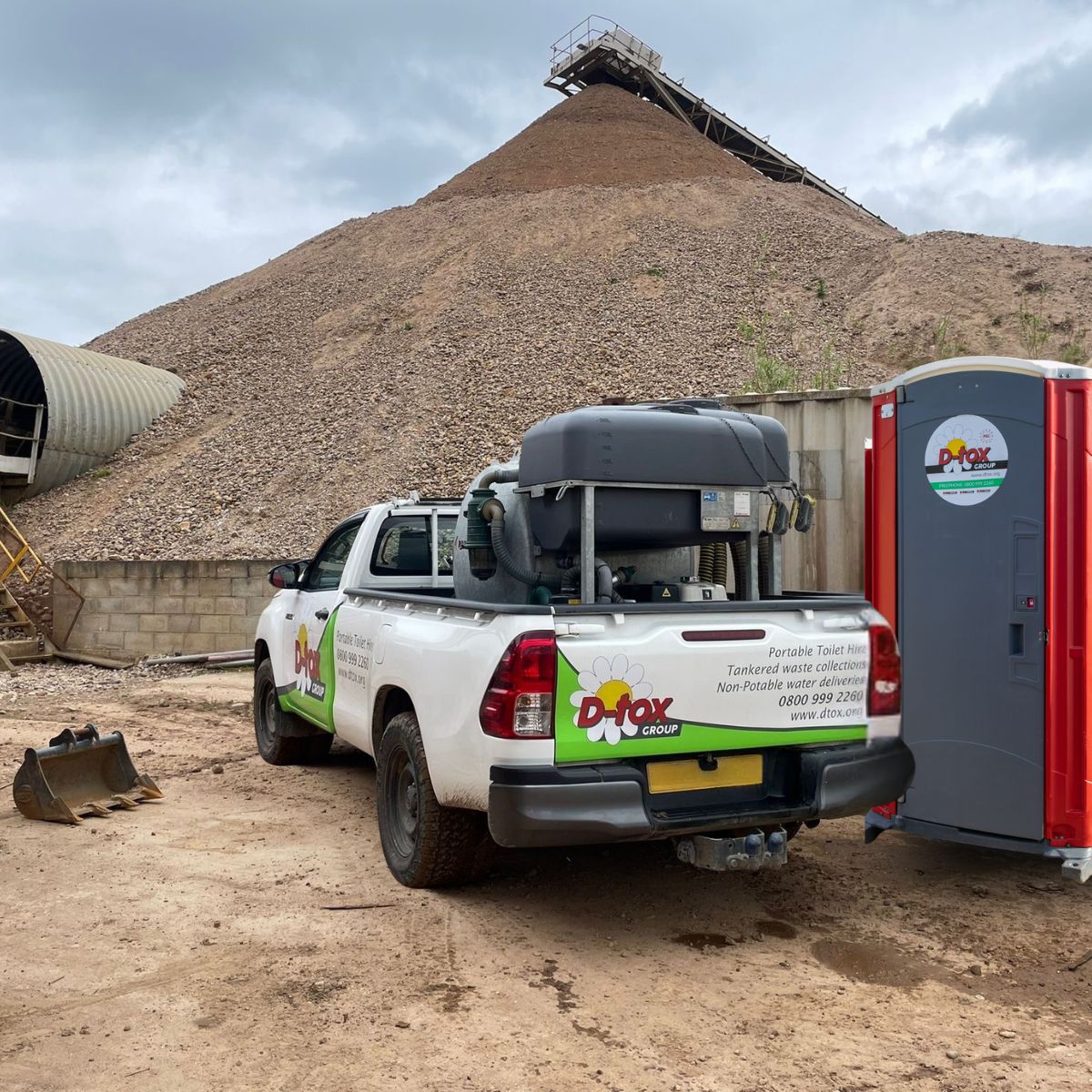
A toilet may be perfectly placed for workers but inaccessible to the vehicle that needs to service it. Consider vehicle access, site entrances, turning space, ground conditions and changes to the site layout before agreeing a position.
Avoid soft or unstable ground
Grass may look convenient at the start of a project but wet weather and vehicle movements can quickly make it unsuitable. A firm, level surface is always preferable.

How Much Does Construction Site Toilet Hire Cost?
There is no single price because every project is different. The main factors are the number of units, the type of toilet, hire duration, servicing frequency and site location. The cheapest option is not always the right one if toilets are too few, too far away or serviced too infrequently.
To get an accurate quote, tell us your site location, approximate number of workers, expected hire period and any specific site access requirements.
Construction Toilet Hire Across the Midlands
D-Tox provides construction site toilet hire across the Midlands, within approximately 50 miles of our depot in Aldridge, Walsall.

Black Country: Wolverhampton, Walsall, Dudley, Sandwell

Birmingham: Birmingham, Solihull, Sutton Coldfield, Coventry

Staffordshire: Lichfield, Tamworth, Cannock, Burton-upon-Trent

Outer areas: Telford, Stratford-upon-Avon, Redditch
Construction Site Toilet Hire FAQs
How many portable toilets do I need for a construction site?
Allow one portable toilet for every seven workers where toilets are emptied once a week. This is HSE-referenced guidance. The actual number depends on workforce numbers, working patterns, site size and servicing frequency.
What is the minimum hire period?
D-Tox has a two-week minimum hire period.
Does the portable toilet come with a sink?
Standard units include a small sink with cold running water. To meet HSE warm water requirements, a hot wash toilet is recommended. These include a forearm sink and water heater requiring a 240v electrical connection.
Is weekly servicing included?
Yes, weekly servicing is included as standard with all construction toilet hires. Additional servicing can be added if needed.
Need to Hire a Construction Site To Hire in the Midlands?
Whether you are planning a new development, managing an active site or reviewing your existing welfare provision, D-Tox can help.
With more than 30 years of experience across the Midlands, we understand that good welfare provision is about providing the right facilities, in the right places, with the right servicing arrangement.Tell us about your project and we will help you plan it properly.


