Construction Site Toilet Calculation Guide: HSE Rules, BS6465 and Unit Selection
Meeting Health and Safety Executive (HSE) welfare standards on a UK construction site requires providing adequate, clean and properly equipped toilet and washing facilities for your workforce.
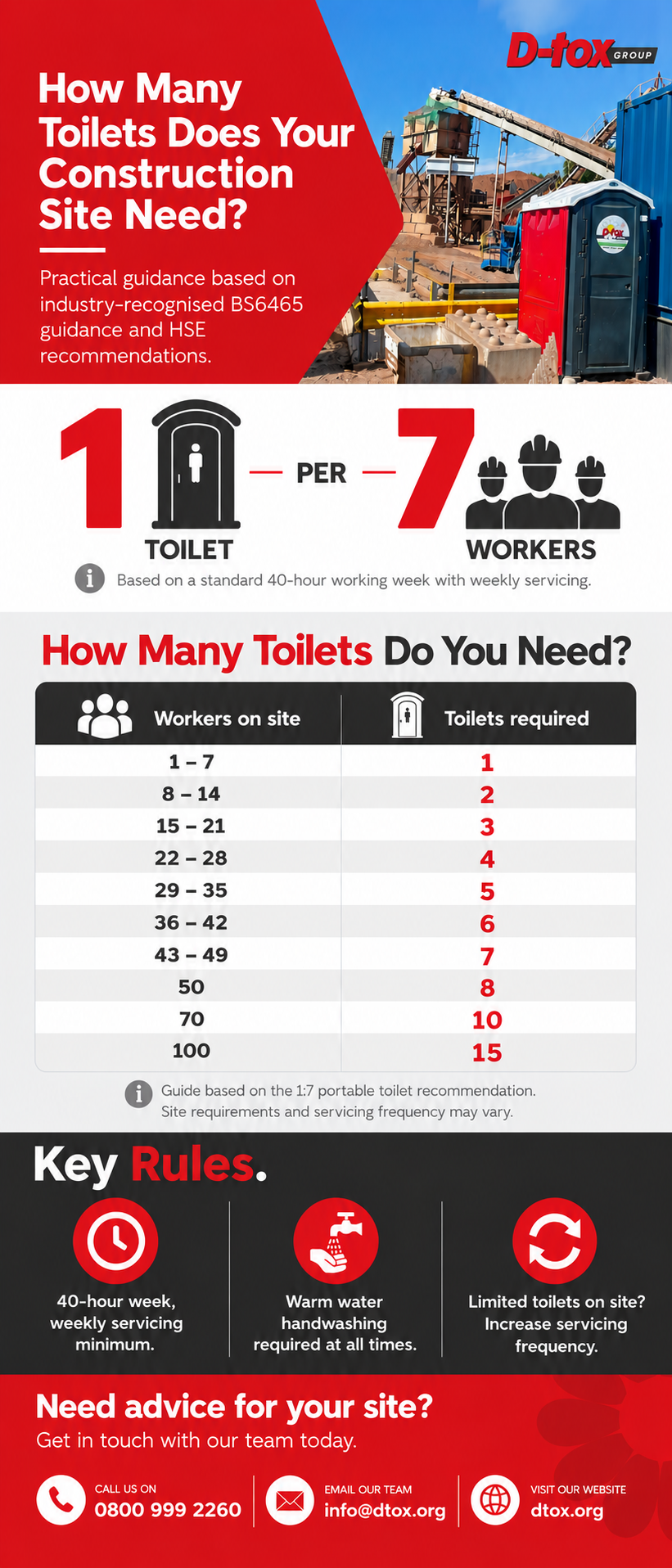
The Baseline: One Toilet per Seven Workers
Under British Standard BS6465-1 and HSE welfare guidelines, the baseline standard for temporary construction sites using portable chemical toilets is one portable toilet per seven workers, based on a standard 40-hour working week with weekly servicing included.
For a short answer, see our guide to how many portable toilets you need for a construction site.
Key HSE Guidelines and Requirements
The Health and Safety Executive sets strict rules under Schedule 2 of the Construction (Design and Management) Regulations 2015 (CDM 2015) and the Workplace (Health, Safety and Welfare) Regulations 1992.
Toilet Facilities
- Accessibility: toilets must be easily accessible so workers do not face a long journey or queue.
- Privacy and security: rooms must be lockable from the inside, adequately lit and ventilated.
- Gender separation: separate lockable rooms are required unless each facility is in a self-contained, fully lockable room suitable for unisex use. Female facilities must include sanitary waste disposal units.
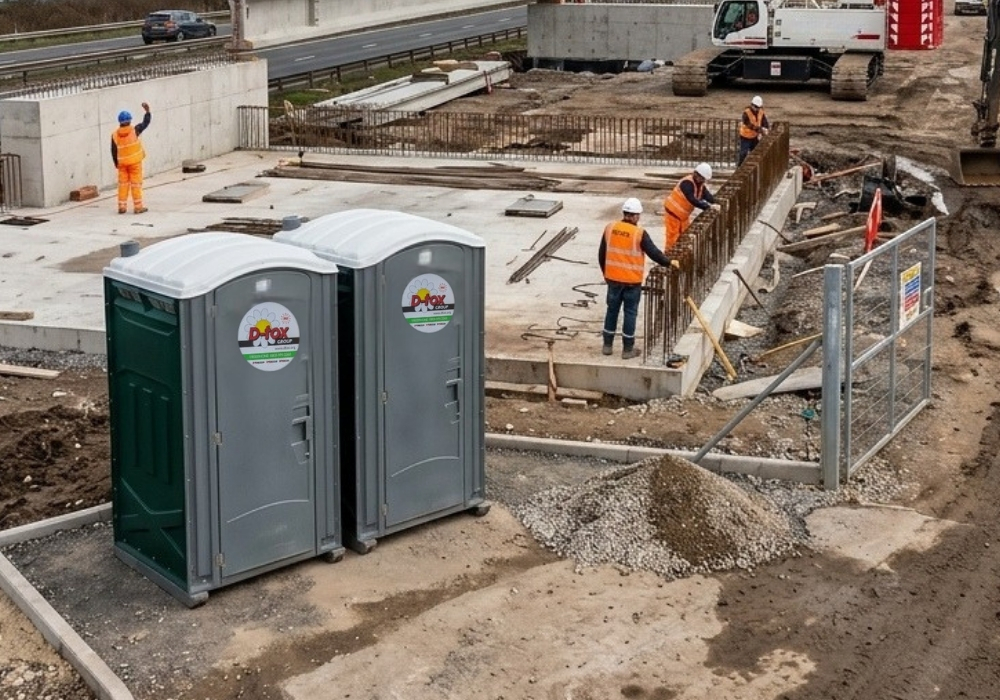
Portable toilets are individually lockable, have white roofing to allow natural light, and have louvred wall slots and a waste tank stack pipe for ventilation. They therefore meet these key criteria, with the addition of sanitary bins for female workers.
Washing and Forearm Sinks
- Sinks: HSE explicitly states that hand sanitisers or small hand basins are inadequate on construction sites where workers handle hazardous materials such as cement, lead or micro-organisms.
- Basin dimensions: sinks must be large enough to allow workers to wash their hands, face and forearms.
Water supply: facilities must provide clean running hot and cold, or warm, water along with soap and hygienic drying solutions such as paper towels.
Standard portable toilets have a cold running water tap. A hot wash toilet provides a forearm sink and hot and cold water tap, although an electrical connection is needed for this.
Site Scenarios: When the 1:7 Ratio Is Not Enough
While the 1:7 ratio serves as a baseline, site conditions often dictate whether you need extra units or additional servicing visits during the week.
Scenario A: Phase 1 Groundworks and Remote Builds
Mains connections rarely exist during early groundworks. Self-contained chemical toilets provide the only viable welfare solution. In muddy conditions, daily interior cleaning or extra weekly servicing is often needed to keep facilities hygienic.
Scenario B: Summer Peak Builds and Extended Hours
When crews work 50 or more hours a week or operate during summer heatwaves, increased fluid intake leads to higher toilet usage. To prevent tanks filling prematurely, either order additional toilets or schedule mid-week servicing.
Scenario C: Multi-Storey Fit-Outs and Subcontractor Spikes
As project phases transition from core structure to fit-out, subcontractor numbers swell. Placing portable toilets on upper floors or key access points prevents long delays and travel times across the site.
Key Factors That Increase Toilet Requirements
- Shift length and extended hours: working over 40 hours per week increases tank usage, meaning either additional units or more frequent waste servicing is needed.
- High temperatures and hydration: increased fluid intake during summer months leads to higher usage rates, filling waste tanks faster.
- Subcontractor influxes: on-site trades vary throughout a project's lifecycle. Catering only to core staff often results in non-compliance during peak build phases.
- Muddy site conditions: heavy foot traffic in poor weather requires more frequent cleaning arrangements beyond standard weekly servicing.
D-Tox Portable Toilet and Welfare Equipment Range
D-Tox offers a complete range of site-ready portable toilets, wash stations and waste management equipment tailored for UK construction sites.
Portable Toilets
- Standard Toilet Hire: self-contained chemical toilet featuring a cold-water handwash sink, ideal for general site use.
- Hot Wash Toilet Hire: features an integrated water heater and a large forearm-length sink, delivering continuous hot running water to meet HSE hand-to-forearm washing requirements.
- Single Mobile Urinal: complements standard site toilets to reduce queue times on larger workforce sites.
Standalone Washing and Sanitation
- 2-Man Sink Units: foot-operated, dual-station washing units equipped with soap dispensers for high-traffic areas or near eating areas.
- Hand Sanitiser Units: freestanding sanitation stations ideal for secondary hygiene checkpoints across large sites.
Site Water and Waste Management Services
- Effluent Tank Hire: large plastic tanks for toilet, shower and kitchen waste, suitable for use under site welfare cabins.
- Water Bowser Hire and Non-Potable Water Delivery: tanker services providing non-potable bulk water supplies for site facilities and tank refills.
- Servicing and Tank Emptying: weekly servicing is included with construction toilet hire, with options for extra visits, customer-owned unit servicing and effluent tank emptying.
Ready to Set Up Your Site Welfare?
Operating from Aldridge, Walsall, D-Tox delivers HSE-compliant site toilets, wash stations and waste management services across the Midlands and surrounding regions.
Get a quote or check availability for your project: call 0800 999 2260 or visit the D-Tox Construction Toilet Hire page.
All D-Tox road staff complete health and safety and risk management training through Portable Sanitation Europe (PSE), which provides accredited training for the portable sanitation industry. The online course is accredited by RoSPA, and staff also complete on the job shadowing before they go out on their own.
FAQs
Are portable chemical toilets legal on UK construction sites?
Yes. HSE regulations accept portable chemical toilets where mains-connected flushing toilets are not achievable, particularly during early project stages, on short-duration sites or in remote locations.
Is hand sanitiser alone acceptable for site welfare?
No. HSE guidelines mandate running warm or hot water with sinks large enough for forearm washing where hazardous substances such as cement or silica dust are present.
What is included in standard D-Tox toilet hire?
All standard site toilet hires include delivery to site, set up in a suitable location, and a weekly service covering waste pump-out, freshwater refill and interior clean of the toilet unit.


