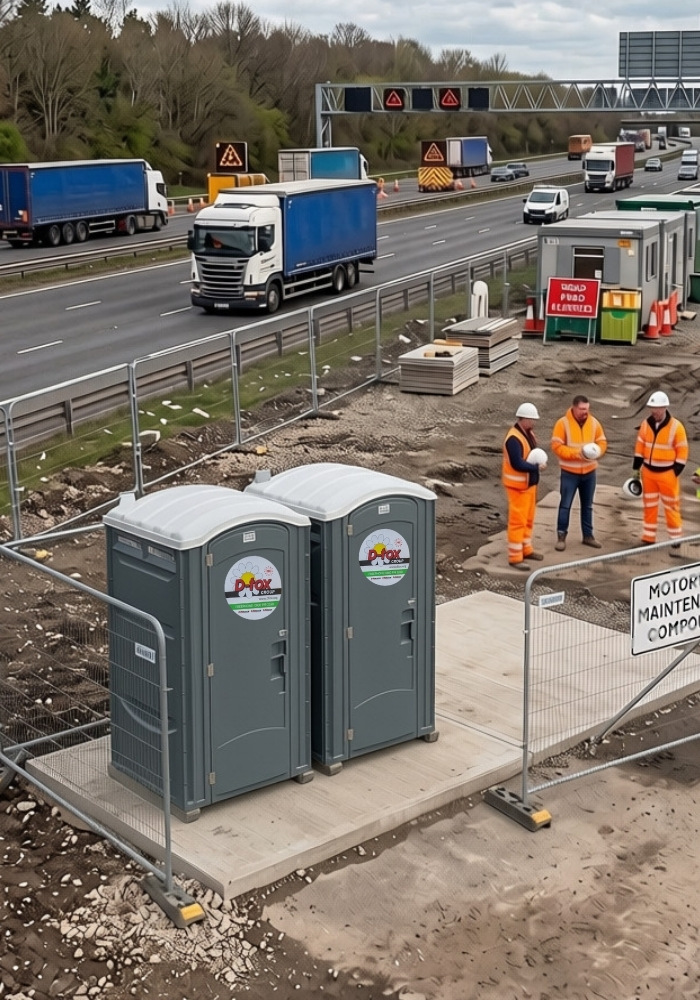
Portable Toilets for Groundworks and Civil Engineering
Quick answer: What portable toilets are best for groundworks?
Self-contained portable toilets are usually the most practical choice for groundworks and civil engineering sites where mains water, electricity and drainage are not yet available. Standard chemical toilets can operate independently of these services, while hot wash toilets provide heated handwashing water where a suitable electrical supply is available. Toilet numbers, placement and servicing should be planned around workforce size, site access, ground conditions and the length of the project.
Groundworks and civil engineering projects often begin before the infrastructure needed to support a construction site is in place. With no mains drainage, limited water supplies, exposed working areas and constantly changing ground conditions, providing suitable welfare facilities takes careful planning.
Self-contained portable toilets provide a practical solution for groundworks contractors, allowing workers to access sanitation before permanent site facilities become available. However, getting the right units delivered, positioned and serviced depends on more than simply choosing a toilet and arranging a delivery.
D-Tox provides portable toilet hire and associated waste management services for construction and civil engineering projects across the West Midlands and surrounding areas. Here is what groundworks contractors and site managers should consider when planning welfare provision.
Why groundworks create different welfare challenges
Unlike later stages of a construction project, groundworks frequently take place on undeveloped land. Access roads may still be under construction, working areas can be spread across a large site, and the final position of buildings, compounds and welfare cabins may not yet be established.
These conditions create several practical challenges:
- No mains connections: Permanent water, power and drainage may not be available at the start of the project.
- Mud and unstable ground: Heavy rain, excavation and plant movements can leave access routes unsuitable for service vehicles.
- Changing site layouts: Excavation areas, temporary roads and material storage locations change as work progresses.
- Restricted access: Temporary gates, narrow haul roads, parked machinery and stored materials can prevent delivery or servicing vehicles from reaching the toilets.
- Remote working areas: Roadworks, drainage schemes and linear infrastructure projects may extend over considerable distances, making toilet placement particularly important.
These are not just logistical inconveniences. If toilets cannot be accessed or serviced, the facilities may become unusable when the workforce needs them.
Which portable toilets are suitable for groundworks?
For early-stage groundworks, self-contained chemical flush toilets are often the most practical option because they do not require mains water, electricity or drainage.
D-Tox standard portable toilets have an integrated water supply and waste-holding tank, making them suitable for sites where permanent services are not yet available. They can be delivered and positioned close to the workforce, subject to:
- Safe access for employees and visiting service drivers.
- Suitable ground conditions.
- A position close enough for the servicing vehicle to reach the unit with its pipework and empty the waste tank.
Standard toilet hire can support a range of projects, including:
- Housing development and residential groundworks.
- Drainage, sewer and utility installation.
- Road construction and highway maintenance.
- Foundations, excavation and site preparation.
- Civil engineering and infrastructure projects.
- Smaller construction projects and remote working areas.
For longer-term construction hire, D-Tox includes weekly servicing, covering waste removal, cleaning, replenishment and sanitising, provided the units remain accessible.
Toilet numbers should reflect the workforce, working hours and site arrangements. As a starting point, D-Tox uses one toilet for up to seven people working a 40-hour week. This is a planning benchmark, not a substitute for assessing the project's actual welfare requirements. Our guide explains how many toilets a construction site needs.
See our standard portable toilet hire information for specifications and servicing details.
Hot wash toilets: planning for warm-water handwashing
Cold weather makes welfare planning particularly important on groundworks sites. Workers may spend long periods outdoors in wet, muddy conditions, while the absence of permanent facilities can make suitable handwashing harder to arrange.
Under the Construction (Design and Management) Regulations 2015, construction sites must provide suitable and sufficient welfare facilities. The specific facilities required depend on the work and site circumstances. Where warm water is required for adequate handwashing, this needs to be addressed in the welfare plan rather than left until the weather turns.
D-Tox hot wash portable toilets combine self-contained toilet facilities with a water heater connected to the sink. They are suitable for construction and civil engineering projects where mains water and drainage are unavailable.
One important difference from a standard portable toilet is the power requirement: D-Tox hot wash units need a 240v electricity supply. Site managers should confirm that a suitable supply or generator is available before booking.
Warm-water handwashing should be considered from the outset, particularly for projects starting in autumn or winter. It is also worth reviewing the arrangement whenever the workforce increases or the nature of the work changes.
Find out more about hot wash portable toilet hire.
When should groundworks sites consider effluent tank hire?
Larger groundworks operations may run several welfare facilities alongside a welfare cabin. Where the cabin produces wastewater, but a suitable mains drainage connection is unavailable, an effluent holding tank can form part of the site's waste management arrangement.
An effluent tank collects wastewater for subsequent removal by an appropriate tanker service. Tank capacity and collection frequency need to be matched to the expected wastewater volume, the strength of the waste (which will affect discharge costs), workforce size and the duration of the project.
Before arranging hire, consider:
- How many people will use the welfare cabin and associated facilities.
- The expected volume of wastewater generated.
- Available space for the tank and safe access for emptying.
- How frequently the tank will need to be emptied.
- Whether the tank location will remain accessible as the site develops.
D-Tox offers effluent tanks in different capacities, including linkable options where additional capacity is required. Discuss the proposed arrangement with the hire team so that the tank, positioning and emptying schedule can be considered together.
Explore D-Tox's construction hire products and services.
Getting delivery and servicing access right
A portable toilet is only useful if it can be delivered, positioned and serviced safely. Groundworks sites can change considerably between the initial delivery and the first scheduled service, so access arrangements need to be considered throughout the hire period.
Before delivery, tell your supplier about:
- Ground conditions: Is the delivery point firm and level enough for safe positioning? Could wet weather make the approach impassable?
- Gates and access restrictions: Are there locked gates, height restrictions, weight limits or narrow entrances?
- Vehicle movements: Will plant, deliveries or parked vehicles obstruct the route?
- Turning space: Can the delivery or service vehicle manoeuvre safely, or will it need a clear approach and exit?
- The proposed location: Can the driver reach the unit without crossing an active excavation or hazardous working area?
- Pipework: Our tanker drivers carry long lengths of pipework, but talk to your supplier about accessibility to make sure your service can take place.
It is also important to keep the route clear for subsequent weekly services. A unit that was accessible on Monday may be blocked by spoil heaps, materials or new site works by Friday.
If access is likely to change, agree an alternative position with your supplier before moving the unit. Let the hire team know its new location so that scheduled servicing is not missed.
Plan toilet placement before the site develops around the units
Toilet placement should be considered during site set-up, not after the compound and working areas have filled up.
Choose a location that is convenient for workers, safely separated from active operations and accessible to service vehicles. Avoid placing toilets where excavation, stockpiles, temporary fencing or future construction work could restrict access.
On larger civil engineering projects, several strategically positioned units may be more useful than placing all the toilets in one compound. The arrangement should reflect where people are working and how easily facilities can be reached throughout the shift.
Review the layout as the project progresses. A change in workforce numbers, working hours or the distance between work areas may mean the original provision is no longer suitable.
How welfare requirements change as the main build begins
Groundworks welfare is not necessarily the same as welfare provision for the main construction phase. As the project develops, the workforce may increase, new trades may arrive, welfare cabins may become operational and permanent services may eventually be connected.
Review toilet numbers, handwashing arrangements and servicing frequency at each transition. A facility that was adequate for a small groundworks team may not meet the needs of a larger workforce working longer hours.
Equally, do not assume that a welfare cabin removes the need for portable toilets everywhere. Units may still be needed near remote work areas, separate phases or locations where workers cannot conveniently access the main compound.
A planned review with your toilet hire supplier helps you adapt provision without unnecessary disruption or last-minute changes.
Portable toilet hire for groundworks across the West Midlands
Choosing the right welfare facilities early helps keep groundworks projects organised, supports workers and avoids preventable servicing problems.
D-Tox supplies standard and hot wash portable toilets, effluent tanks and associated waste management services for construction and civil engineering projects across the West Midlands and surrounding areas. Our team can help you consider workforce numbers, site access, unit placement and servicing requirements before delivery.
Planning a groundworks or civil engineering project?
- Visit our construction site toilet hire and welfare advice.
- Explore our construction hire range.
- Read how construction site toilet hire is priced.
- Request a quote by calling 0800 999 2260 or emailing info@dtox.org.
Tell us your expected workforce, project duration, site location and access arrangements, and we can discuss a suitable solution.
Frequently asked questions
What portable toilets are best for groundworks?
Self-contained chemical flush toilets are generally a practical choice because they do not require mains water, power or drainage. The number and type of units should reflect workforce numbers, working hours, site layout and welfare requirements.
Do portable toilets for groundworks need mains services?
No. Standard self-contained chemical toilets have integrated water and waste-holding systems, so they can operate without mains water, electricity or drainage. Hot wash units require a 240v electrical supply to heat the handwashing water.
How many site toilets does a groundworks contractor need?
As a starting point, D-Tox uses one toilet for up to seven people working a 40-hour week. Actual requirements should be assessed against the workforce, working hours, site conditions and applicable welfare requirements.
Can portable toilets be serviced on muddy or restricted-access sites?
Yes, provided the service vehicle can reach the units safely. Tell your supplier about ground conditions, gates, narrow access routes and turning restrictions before delivery, and keep access clear for scheduled servicing.
When should a groundworks site hire an effluent tank?
Consider an effluent tank when welfare facilities generate wastewater but a suitable mains drainage connection is unavailable. Tank capacity and emptying frequency should be based on expected wastewater volumes and safe tanker access.
Does a groundworks site need hot wash toilets in winter?
The need for suitable warm-water handwashing must be assessed as part of the site's welfare provision. Hot wash toilets can provide warm water where mains water and drainage are unavailable, but they require a 240v electrical supply. Confirm the site's specific requirements and arrangements before work begins.


